General Medical CouncilBritish College of Aesthetic MedicineNHSObagi MedicalAllergan AestheticsTeoxaneGeneral Medical CouncilBritish College of Aesthetic MedicineNHSObagi MedicalAllergan AestheticsTeoxane

Prestwich and Warrington

Anti-wrinkle treatment, planned around your anatomy.

Anti-wrinkle treatment is a prescription-only procedure. Before any recommendation is made, Dr Andrew Winter conducts a full medical assessment, reviewing your facial anatomy, muscle movement, medical history, and the result you are hoping to achieve.

Before and after anti-wrinkle treatment example
Real clinic example Results vary. Treatment is only offered where suitable after consultation.

How it works

Botulinum toxin, explained plainly.

Anti-wrinkle treatment uses botulinum toxin, a prescription-only medicine that temporarily relaxes specific facial muscles. By reducing the contraction of the muscles responsible for expression lines, the skin above them becomes smoother and less creased. The effect is temporary and wears off gradually over several months, it is not permanent, and repeated treatment is at the patient’s discretion.

The procedure involves a small number of carefully placed injections into targeted muscles. The precise placement depends on your facial anatomy, the areas being treated, and the degree of muscle movement present. Over-treatment or poorly placed injections can produce an unnatural appearance, which is one reason why practitioner experience and careful assessment matter significantly. A conservative approach, planned after a proper evaluation of your facial movement, produces results that look appropriate rather than overdone.

Botulinum toxin is a prescription-only medicine in the UK. This means it must be prescribed by a registered healthcare professional following an assessment, it cannot lawfully be administered by someone without prescribing authority, nor can a remote prescriber issue a prescription without having met the patient. Dr Winter prescribes directly. There is no third-party prescriber involved who has not assessed you in person.

Who it may suit

Anti-wrinkle treatment is not for everyone.

Anti-wrinkle treatment may be appropriate for patients with established expression lines, lines caused by repeated muscle movement, who want a modest, natural-looking reduction in their appearance. The consultation focuses on whether treatment is appropriate for your specific concern and anatomy, and what a realistic outcome looks like for you in particular. Not every line is a muscle-movement line, and not every patient is a suitable candidate.

Treatment is generally not appropriate where:

  • Fine lines are primarily caused by skin quality changes rather than muscle movement
  • Significant skin laxity is present that filler or a skin-focused treatment would better address
  • The patient has unrealistic expectations about the degree of change that is achievable
  • Medical history includes contraindications to botulinum toxin

Common treatment areas

Areas that may be assessed during consultation.

The following areas are commonly discussed during anti-wrinkle consultation. Suitability depends on facial anatomy, muscle movement, and skin quality assessed at the appointment. Not all areas will be appropriate for every patient, and the consultation will identify which, if any, are right for your specific case.

Forehead lines

Horizontal lines across the forehead caused by raising the brows. Treatment here requires careful assessment of brow position to avoid heaviness or brow drop, getting this right depends on understanding your individual anatomy and muscle pattern.

Frown lines

Vertical lines between the brows caused by the corrugator muscles. One of the most commonly treated areas and, for many patients, one where results tend to be consistent and well-tolerated.

Crow’s feet

Lines at the outer corners of the eyes caused by smiling and squinting. Treatment here tends to produce very natural-looking results and is often well-suited to patients who want a subtle improvement without significant change to facial expression.

Other areas

Additional areas may be discussed depending on your specific concern. Suitability is assessed individually, what is appropriate for one patient will not always be appropriate for another, and the consultation will clarify what is and is not recommended for you.

The consultation

What happens before treatment is considered.

Every patient begins with a consultation, not a combined consultation-and-treatment appointment. The consultation covers your medical history, the concern you want to address, your facial anatomy in movement and at rest, and what a realistic outcome looks like for your specific case. There is no pressure to proceed, and the appointment is focused on giving you the information you need to make an informed decision.

During this appointment, Dr Winter will assess whether anti-wrinkle treatment is appropriate, discuss the areas involved, explain what realistic results look like for you, and give you time to ask questions before any decision is made. If you have concerns about looking unnatural, or if you have had treatment elsewhere and been unhappy with the result, those details are worth raising, they will inform how the plan is approached. You are under no obligation to proceed at any stage.

In some cases the assessment concludes that anti-wrinkle treatment is not the right approach, that a different treatment, a skin quality focus, or no treatment at all is more appropriate. That outcome is the assessment working correctly, not a failure of the process. Dr Winter has 30 years of clinical experience in skin medicine, and part of that experience is recognising when intervention is not the right answer.

Request consultation

Results

What to expect and when.

Results from anti-wrinkle treatment are not immediate. The effect typically becomes visible over 7 to 14 days following treatment, with the full result apparent after approximately two weeks. During this period the treated muscles gradually reduce their activity and the skin above them begins to settle. Dr Winter will discuss this timeline with you during consultation so you know what to expect and when to assess the outcome.

The duration of results varies by patient, treatment area, and the volume of product used. Factors including muscle mass, individual metabolism, and the specific area treated all influence how long the effect persists. A treated area typically returns toward its pre-treatment appearance over three to five months. Follow-up treatment is entirely at your discretion, there is no obligation to maintain a regular schedule, and some patients choose not to repeat treatment once they have seen the result.

The aim at this clinic is a natural, rested appearance rather than a frozen or expressionless result. The approach is conservative, using the amount of product needed for the result discussed at consultation, not the maximum dose. If you have previously had treatment elsewhere and felt the result was too much or too little, that experience is useful information for the consultation and will shape how any plan is structured.

Examples

Before and after treatment examples.

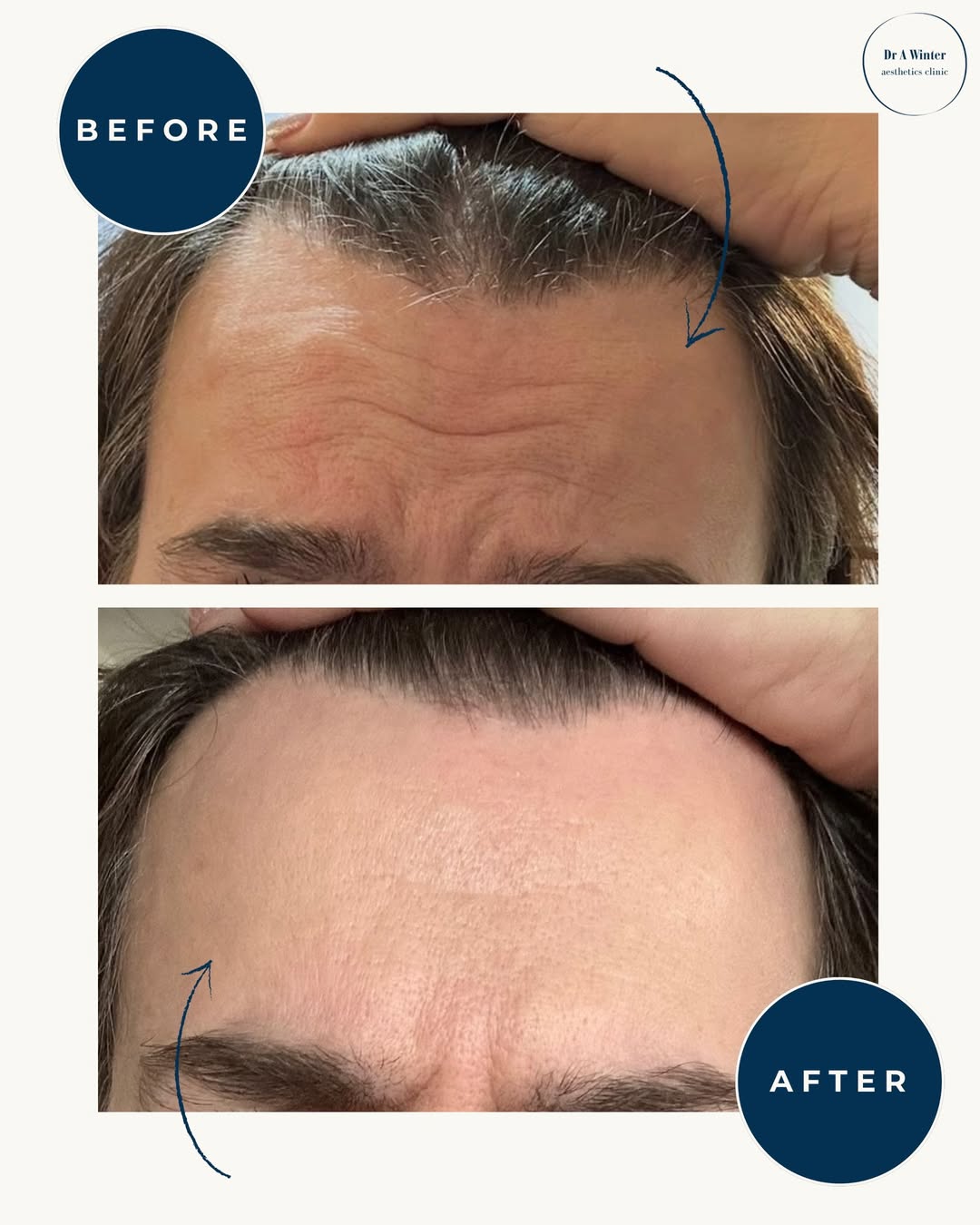
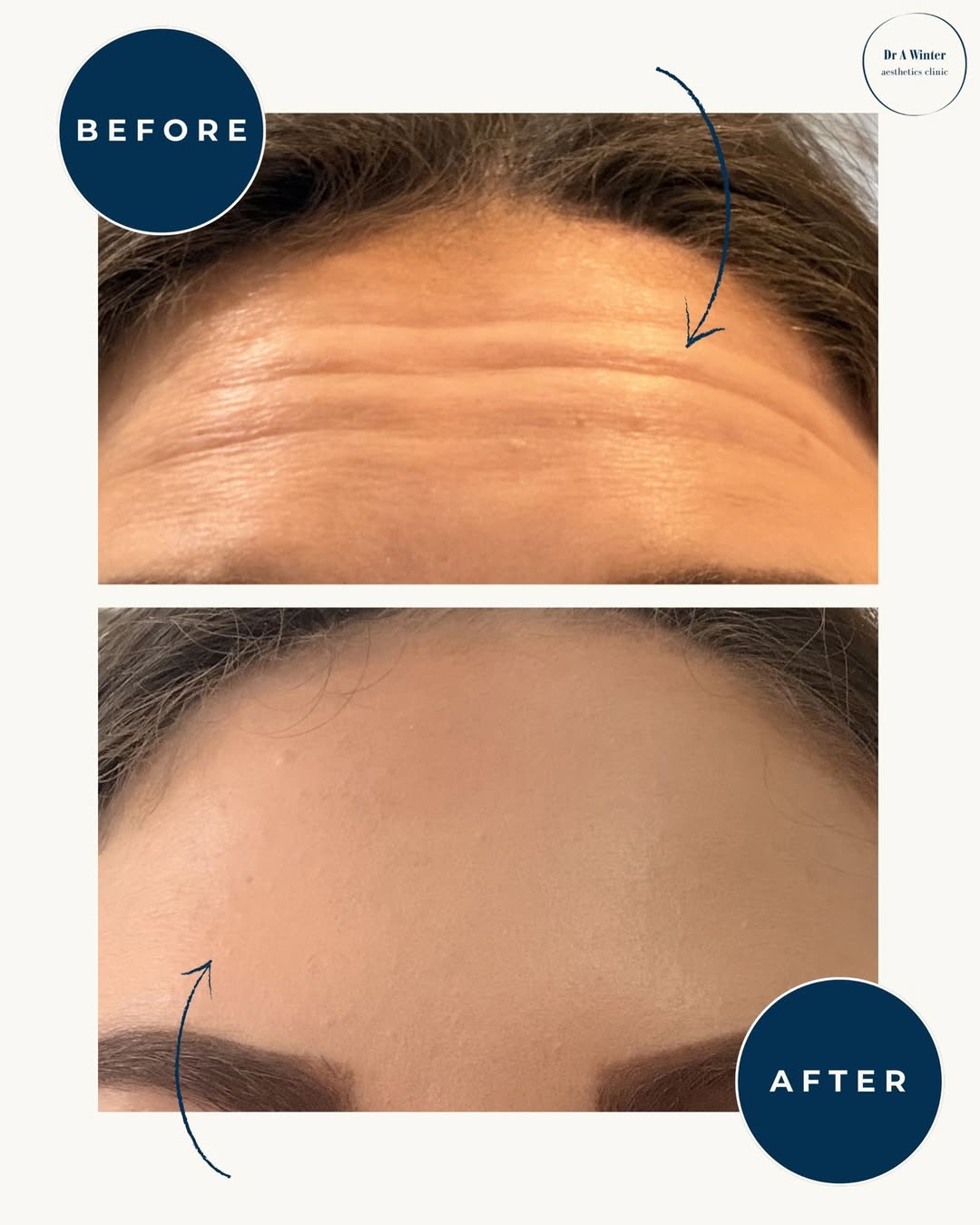
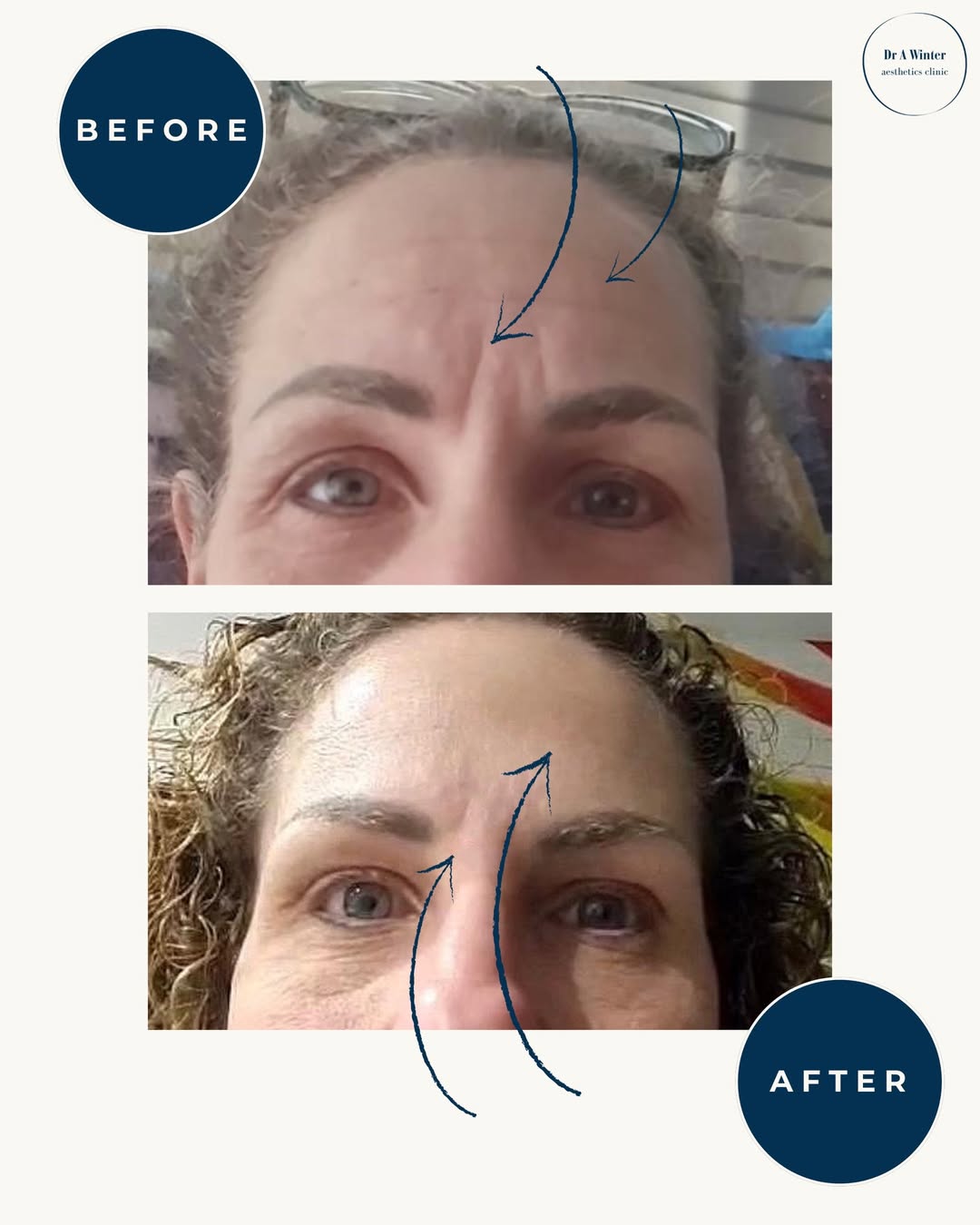
These examples show results from clinic material. They are useful context, not a guarantee. Results vary, and treatment is only offered where clinically appropriate after consultation. The anatomy, muscle movement pattern, and skin quality of each patient will influence what is achievable and which areas are suitable.

Before and after forehead treatment example
Forehead line example. Individual results vary.
Before and after frown line treatment example
Frown line example. Suitability must be assessed first.
Before and after forehead line treatment example
Upper forehead example. Outcomes depend on the treatment plan.

Related concerns

Other concerns that may be relevant.

Fine lines and wrinkles

Understanding what causes fine lines and which treatment approaches are appropriate for different types. Not all lines respond to anti-wrinkle treatment, and the distinction matters for planning.

Facial volume loss

Volume loss affects facial contour and often contributes to the appearance of lines. Dermal fillers may be discussed alongside or instead of anti-wrinkle treatment depending on what the assessment finds.

Skin quality

Skin quality changes affect how treatment results appear and what is achievable. A dermatological assessment may include skin quality review alongside injectable options, particularly relevant given Dr Winter’s background in clinical dermatology.

Questions

Anti-wrinkle treatment FAQs

What is anti-wrinkle treatment?

Anti-wrinkle treatment uses botulinum toxin, a prescription-only medicine that temporarily relaxes specific facial muscles. By reducing the contraction of muscles responsible for expression lines, the skin above them becomes smoother and less creased. The effect is temporary and wears off gradually over several months. Because botulinum toxin is prescription-only in the UK, it must be prescribed by a registered healthcare professional following a proper assessment, it cannot lawfully be obtained or administered without this step.

Do I need a consultation before treatment?

Yes, always. Anti-wrinkle treatment is a prescription-only procedure in the UK, which means a prescription must be issued by a qualified healthcare professional before any treatment can take place. At this clinic, the consultation covers your medical history, current medications, the areas you are concerned about, your facial anatomy, and what a realistic outcome looks like for your specific case. There is no combined consultation-and-treatment appointment. The consultation comes first, and you are under no obligation to proceed.

Which areas can be treated?

The most commonly assessed areas are the forehead (horizontal lines caused by raising the brows), the frown lines between the brows (caused by the corrugator muscles), and the crow’s feet at the outer corners of the eyes. Other areas may be discussed depending on your specific concerns. Which areas are appropriate, and whether treatment is appropriate at all, depends on an assessment of your facial anatomy, muscle movement pattern, and skin quality at the consultation.

How long do results last?

Results typically last between three and five months, though this varies by patient, treatment area, and the volume of product used. Individual anatomy, muscle strength, and lifestyle factors all influence how long the effect persists. A treated area returns gradually toward its pre-treatment appearance as the botulinum toxin wears off. Dr Winter will discuss realistic timelines for your specific case during the consultation, there is no single answer that applies to everyone.

Will results look natural?

The approach at this clinic is conservative and anatomy-led. The aim is a rested, natural-looking result, not a frozen or expressionless appearance. Treatment planning is based on your facial movement and anatomy, and the amount of product used reflects what is needed to achieve the result discussed, not a standardised dose. For patients who are concerned about looking “done,” that concern is worth raising at the consultation so it can be factored into the plan.

Can I have treatment at the Warrington clinic?

Yes. Dr Andrew Winter holds appointments at both the Prestwich clinic (Room 1, 20 Sandy Lane, Prestwich, Manchester) and the Warrington clinic (1 The Shires, Moss Lane, Moore, WA4 6UN). When you submit an appointment request, you can indicate your preferred location and the clinic will confirm suitable availability.
Further reading

Before your consultation.

Why doctor-led aesthetics matters

Understanding practitioner qualifications and the questions worth asking before booking anywhere. Relevant reading for patients who want to make an informed choice.