How much does anti-wrinkle treatment cost near Manchester in 2026?
Prices vary considerably depending on who is treating you, how many areas you want to address, and what is actually included. This guide sets out what you should expect to pay, and what to look for when comparing options.
Dr Andrew WinterGMC 2584423 · BCAM Full Member15 May 20268 min read
What does anti-wrinkle treatment typically cost near Manchester?
For a single treatment area with a qualified medical practitioner, prices near Manchester generally range from around £200 to £350. If you are treating two or three areas in a single appointment, some clinics apply per-area pricing while others offer a combined rate.
Prices at the lower end of the market tend to reflect practitioners with less formal medical training rather than a genuine cost saving on the treatment itself. The product cost is similar across practices. What differs is the knowledge, accountability, and assessment that surrounds the injection.
What affects the price?
Several factors determine what you will pay for anti-wrinkle treatment in and around Manchester:
Practitioner qualification. A GMC-registered doctor commands a higher fee than an aesthetician with a weekend certificate. Medical training affects how treatment is planned, how complications are recognised, and who can legally prescribe the product in the first place.
Number of areas. Forehead lines, frown lines, and crow’s feet are typically charged separately. Treating all three areas will cost more than a single area.
Unit volume. The amount of product needed depends on your anatomy, facial movement, and the result you are trying to achieve. Some practitioners underdose to reduce cost; this often results in a shorter-lasting or uneven outcome.
Whether consultation is included. A thorough consultation takes time. Clinics that skip it, or include it as a five-minute conversation on the day, are compressing a step that matters for safety and suitability.
Why doctor-led treatment is priced differently
Anti-wrinkle injections using botulinum toxin are prescription-only medicines in the UK. Only a registered medical professional, a doctor, dentist, or prescribing nurse, can legally authorise and prescribe the product. Anyone else offering treatment is either working illegally or purchasing pre-drawn syringes through a workaround that removes the prescribing step entirely.
When you see a doctor, you are paying for GMC registration, professional medical indemnity, the right to prescribe, and the training to recognise when treatment is not appropriate. You are also paying for someone who has clinical experience beyond aesthetics, which matters when your medical history includes conditions that interact with treatment.
The market in 2026: what has changed
The aesthetics market in the UK changed materially from 2024 onwards. Schedule 7 of the Health and Care Act 2022 introduced a requirement that botulinum toxin and certain other aesthetic injectable procedures must be performed by or under the direct oversight of a registered healthcare professional with prescribing authority. This closed, in principle at least, the route by which an unqualified aesthetician could obtain and administer these treatments through a remote prescriber who had never assessed the patient.
The practical effect of this is visible in pricing. Legitimate practitioners, those who hold GMC, NMC, or GDC registration, who carry appropriate medical indemnity, who write prescriptions directly for the patients they have examined, have overhead that reflects this. There are registration fees, annual medical indemnity premiums, consultation time that cannot be compressed without compromising safety, and continuing professional development requirements that take practitioners away from treatment sessions.
When you encounter a price for anti-wrinkle treatment that sits significantly below the £200 threshold, it is worth considering what that price implies. The product cost is not meaningfully different between a legitimate clinic and an unregulated one. The margin has to come from somewhere: usually from practitioner qualification, consultation time, or the administrative infrastructure of operating within a regulated framework. A price that only works if corners are being cut is not a bargain. It is a different category of service.
This is not to suggest that every low-cost clinic is dangerous. But the risk profile is different, and in a market that now has clearer regulatory standards, the burden of verification has shifted to the patient. Asking for a registration number and checking it takes under two minutes. It is a reasonable step before any procedure that carries medical risk.
A note on Botox as a brand name
Most patients use the word “Botox” as a generic term for anti-wrinkle injections. Botox is in fact a brand name owned by Allergan Aesthetics, one of several companies that manufacture licensed botulinum toxin products for clinical use. Other brands in use in the UK include Bocouture, Azzalure, and Dysport. All are formulations of botulinum toxin type A, and all are prescription-only medicines.
The practical differences between licensed brands are modest and largely irrelevant to most patients. The formulation, the dilution, and the injection technique used by the practitioner influence the outcome far more than which specific brand appears on the box. A practitioner advertising heavily that they use a particular branded product is usually emphasising a marketing hook rather than a clinical distinction.
What matters far more than brand is the qualification of the person assessing you and administering the treatment, and the rigour of the assessment that precedes it. A meticulous assessment by a qualified doctor, followed by the most appropriate injection technique for your specific anatomy, will produce a better outcome than any branded product administered by someone without equivalent clinical training.
When comparing clinics, the question to ask is not “which brand do you use?” but “who will be assessing me and what is their medical qualification?” The former is a marketing conversation. The latter is a clinical one.
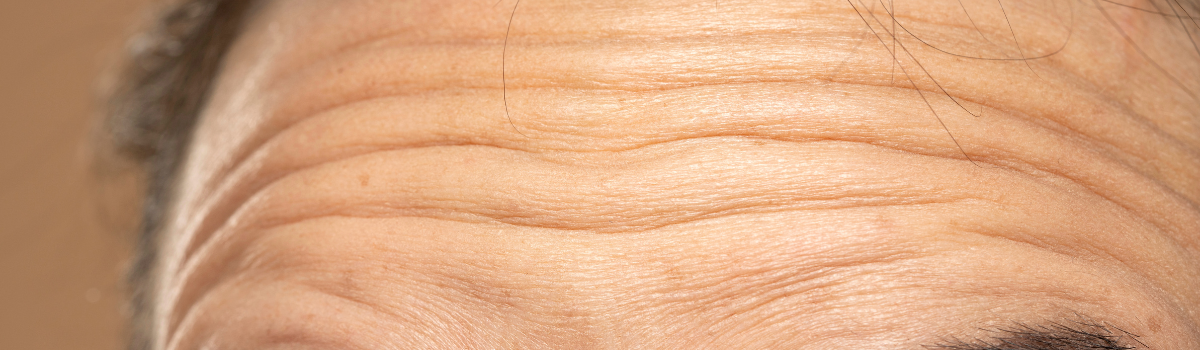
Forehead lines vary in depth and cause. The consultation clarifies which can be addressed with treatment and what a realistic outcome looks like.
What the consultation actually involves, and why it affects price
A thorough medical consultation is not a brief conversation preceding treatment. It is a structured clinical process that takes time, typically 30 to 45 minutes for a first appointment, and that directly determines whether treatment is appropriate, what it should involve, and what a realistic outcome looks like for this particular patient.
During a proper consultation, a doctor will review your medical history in some depth. This includes current medications, as certain drugs interact with botulinum toxin or with the anaesthetic components used in some treatments. It includes previous aesthetic treatments, because the cumulative effect of repeated procedures is clinically relevant. It includes any relevant conditions, neurological, autoimmune, or otherwise, that may affect suitability. And it includes a frank discussion of your concern and your expectation, which is the step most often skipped in clinics that are primarily focused on throughput rather than appropriateness.
Before photos are taken as a baseline. The relevant anatomy is assessed in motion, the practitioner will ask you to make expressions, raise your brows, frown, smile, to understand how your specific muscles move and where they create the lines you want to address. This is not a formality. The injection points, depths, and volumes used should be informed by what that assessment reveals, not by a standard template applied to every patient.
When a clinic charges separately for consultation, it is because this process genuinely takes time and cannot be performed properly in ten minutes. When a consultation is offered free as part of a same-day treatment package, something is being compressed. In most cases, what is being compressed is the clinical assessment itself. The conversation still happens. But the outcome, the treatment recommendation, is less likely to have been arrived at independently of the commercial transaction.
What a higher price actually buys you
The gap between a £100 treatment and a £280 treatment is not the cost of the product. The gap is the following:
GMC registration means the practitioner is accountable to a statutory regulatory body with the power to investigate complaints, impose conditions, suspend, and remove the licence to practise. That accountability shapes how clinical decisions are made. A practitioner who might face a GMC investigation for poor practice makes different decisions than one with no such accountability structure.
Medical indemnity means that if something goes wrong, a complication, an adverse reaction, an outcome that causes genuine harm, there is a structured route to patient recourse. An uninsured or underinsured practitioner leaves you with no meaningful protection if something goes wrong.
Prescribing authority means the doctor writes the prescription for you, based on a direct assessment of your suitability, under their name and licence. This is not a technicality. It is the step that makes the treatment legal and that connects clinical responsibility to a named, qualified individual.
Anatomical and dermatological knowledge means the practitioner understands, at a clinical level, the layers of tissue through which a needle passes, where the relevant nerves and blood vessels are, and why certain injection points carry more risk than others. This knowledge is not available from an aesthetics course of any length. It is a product of years of medical training and clinical practice.
Time means your appointment is not designed to move through as many patients as possible in a session. The consultation takes as long as it takes. The assessment is not rushed. The conversation about realistic outcomes is complete, not abbreviated. This is what the higher price makes possible.
What to ask before comparing prices
Before using price as the primary comparison point between clinics, there are questions worth asking directly:
Is the practitioner GMC, NMC, or GDC registered, and can they give you their registration number so you can verify it?
Do they prescribe for you themselves, following your consultation, or is a remote prescriber involved?
Is the consultation included in the price quoted, and how long does it last?
What happens if you have a complication? Who do you contact, and what is the process?
How long has the practitioner been performing this treatment, and in what clinical context?
A clinic that hesitates or cannot answer these questions clearly is telling you something important. The answers should be immediate and confident.
These are not aggressive or unusual questions. They are the questions any patient would reasonably ask before a medical procedure. A practitioner confident in their qualifications and their process will answer them readily. Hesitation, deflection, or vagueness is informative in its own right.
Dr Winter’s pricing approach
Dr Winter does not publish a fixed price list online, because treatment is genuinely individual. The cost depends on which area is being treated, what volume of product is appropriate for your anatomy and the result you want to achieve, and what the consultation reveals about your suitability and the approach required. Quoting a price before any of that is known would require making assumptions that a proper assessment exists precisely to avoid.
Pricing is discussed at or before the consultation. There are no hidden charges, no packages designed to upsell additional areas, and no pressure to commit during the appointment. What does not vary: a consultation always precedes any treatment recommendation, and treatment is only offered where it is clinically appropriate for that patient. If it is not appropriate, that will be said clearly, along with a clear explanation of why.
To discuss your concern and understand what may be appropriate for you, requesting a consultation is the right starting point. The conversation costs nothing, and it is the only basis on which a meaningful price or treatment recommendation can be given.
Book a consultation
Request an appointment in Prestwich or Warrington.
Share what you would like to discuss. The clinic team will confirm the most appropriate next step.
How much does anti-wrinkle treatment cost near Manchester?
With a doctor-led practitioner, expect around £200–£350 per area. Multiple areas will cost more. Prices below this level typically reflect a lower level of practitioner qualification rather than a genuine saving.
Is the consultation charged separately?
This varies by clinic. At Dr Winter’s practice, a consultation is required before any treatment is offered. Charges are discussed when confirming your appointment.
Why does doctor-led treatment cost more?
GMC registration, prescribing rights, medical indemnity, and clinical training all carry a cost. The higher fee reflects accountability and expertise, not simply a premium brand name.
How long does anti-wrinkle treatment last?
Results vary by patient and treatment area. Dr Winter will discuss realistic timelines during consultation rather than quoting a fixed duration that may not apply to your individual case.
Is cheaper anti-wrinkle treatment ever equivalent in quality?
Occasionally, but the gap is rarely about product cost. It is about practitioner qualification, time, and the clinical rigour of the assessment. A lower price that reflects a shorter consultation, a less qualified practitioner, or no separate assessment represents a different standard of service, not equivalent value.
How can I verify my practitioner’s credentials?
GMC registration can be verified at the GMC website using the practitioner’s registration number. BCAM membership can be verified via the BCAM website. Both searches are free and take under a minute. It is reasonable to do this before booking any medical procedure.
Related reading
If you found this useful, these articles cover related aspects of the decision-making process: